From the icy fjords of Scandinavia to the bustling streets of Mumbai, humanity has devised countless ways to stay fit that transcend the familiar treadmill or weight rack. These traditions, often woven into the cultural fabric of societies, offer a fascinating glimpse into how physical wellness is perceived and practiced around the globe. They are not merely exercises; they are rituals, community gatherings, and sometimes, a form of moving meditation that has been passed down through generations.
In the remote, mountainous regions of Pakistan and Afghanistan, a unique and formidable practice known as Buzkashi reigns supreme. Often referred to as the world's most brutal team sport, it is essentially polo played with a headless goat or calf carcass. Teams of horse-mounted players fiercely compete to grab the heavy carcass, carry it around a marker, and score by tossing it into a designated circle. The game demands immense physical strength to control the powerful steed while wrestling the heavy prize from opponents, supreme equestrian skill to navigate the chaotic field at high speed, and unparalleled mental fortitude to endure the physical collisions and the sheer intensity of the struggle. It is a test of raw, untamed power and endurance, a tradition that has defined strength and honor for Central Asian warriors for centuries.
Traveling to the islands of Greece, one encounters a display of strength that is as much about control as it is about power. Greek Stone Lifting, particularly the lifting of the famed ‘Volcano Stone’ on the island of Santorini, is a historic test of manhood and vitality. The stones, which vary in weight and are often irregularly shaped, are lifted in a specific manner onto the shoulder. This is not about explosive power for a single repetition; it is about demonstrating the functional strength and stability to hoist a heavy, awkward object—a skill that would have been essential in traditional construction and manual labor. The tradition is kept alive during local festivals, where men test their mettle against the weight of history itself, connecting their physical effort to the enduring spirit of their ancestors.
Far to the east, in Japan, the concept of fitness is deeply intertwined with discipline and spiritual development. Radio Taiso is a phenomenally popular nationwide routine. Every morning, millions of Japanese people, from schoolchildren to office workers to the elderly, tune into public NHK radio at precisely 6:30 AM to perform a series of gentle calisthenics and stretching exercises to piano music. This three-minute ritual, begun in 1928, is designed to promote joint health, flexibility, and blood circulation, serving as a unified start to the day for the entire nation. It emphasizes consistency and community well-being over intense exertion, embodying a preventative and holistic approach to health that is seamlessly integrated into daily life.
Meanwhile, in the crowded urban landscapes of China, another morning ritual unfolds. In city parks and public squares, one can witness groups, predominantly of senior citizens, practicing Qigong. This ancient system of coordinated body posture, movement, breathing, and meditation is designed to cultivate and balance the body's vital energy, or ‘qi’. The movements are slow, graceful, and flowing, resembling a slow-motion dance. Practitioners focus on deep, diaphragmatic breathing and mindful concentration, making it a meditative practice as much as a physical one. The benefits are vast, including improved balance, reduced stress, enhanced flexibility, and better cardiovascular health, proving that fitness does not always have to be high-impact to be profoundly effective.
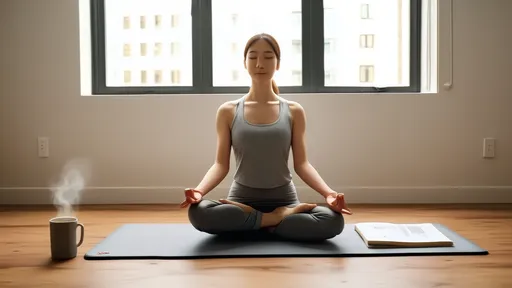
In India, the ancient practice of Yoga needs little introduction, but its depth extends far beyond the popular physical postures, or asanas. Originating thousands of years ago, yoga is a comprehensive system for uniting the mind, body, and spirit. The physical aspect enhances strength, flexibility, and balance, while the incorporation of pranayama (breath control) calms the nervous system and increases lung capacity. Meditation and ethical principles round out the practice, aiming for a state of inner peace and self-realization. It is this holistic nature that has made yoga a global phenomenon, a timeless tradition that offers a complete workout for the entire being.
Venturing into the cold waters of Finland, we find a practice that is as bracing as it is invigorating. Avantouinti, or ice swimming, is a cornerstone of Finnish culture. Enthusiasts cut holes in the thick ice covering lakes and seas to take a quick, shocking plunge into the near-freezing water. This is almost always followed by a session in a traditional Finnish sauna, creating a powerful cycle of extreme hot and cold. Advocates swear by its benefits, which include a massive boost to the immune system, improved circulation as blood vessels rapidly constrict and dilate, a release of endorphins that creates a natural high, and increased mental resilience. It is a stark, powerful reminder of the body's incredible ability to adapt and thrive under extreme conditions.
Across the Baltic Sea in Scandinavia, another outdoor fitness culture thrives, known as Friluftsliv, which translates to "open-air living." This is not a specific exercise but a deeply ingrained philosophy that encourages embracing nature for physical and mental well-being. It encompasses a wide range of activities, from hiking and foraging in the vast forests to cross-country skiing in the winter and kayaking in the fjords during the summer. The goal is to find joy and vitality in simple, self-powered movement outdoors, regardless of the season or weather. It promotes a sustainable, accessible, and deeply rewarding way to stay fit by simply engaging with the natural world.
From the chaotic, powerful spectacle of Buzkashi to the serene, mindful movements of Qigong, these global traditions demonstrate that the path to fitness is as diverse as humanity itself. They remind us that physical culture is not monolithic; it is a rich tapestry woven from history, environment, and community values. Whether it’s the communal rhythm of Radio Taiso, the solitary challenge of lifting a volcanic rock, or the shocking plunge into an icy lake, each practice offers a unique window into a culture's soul and its definition of a healthy, vibrant life.
By /Aug 25, 2025

By /Aug 25, 2025

By /Aug 25, 2025

By /Aug 25, 2025

By /Aug 25, 2025
By /Aug 25, 2025

By /Aug 25, 2025

By /Aug 25, 2025

By /Aug 25, 2025
By /Aug 25, 2025
By /Aug 25, 2025

By /Aug 25, 2025
By /Aug 25, 2025

By /Aug 25, 2025

By /Aug 25, 2025
By /Aug 25, 2025

By /Aug 25, 2025

By /Aug 25, 2025
By /Aug 25, 2025
By /Aug 25, 2025
