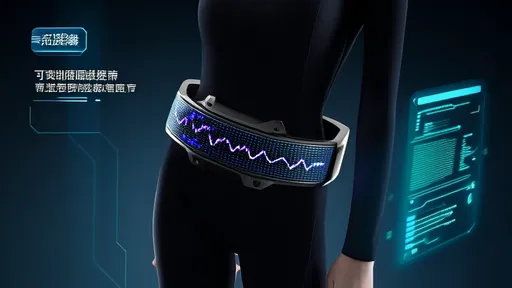
The fashion tech landscape is undergoing a quiet revolution, and it's happening at waist level. Programmable light-up belts, once considered gimmicky accessories for ravers and festival-goers, have evolved into sophisticated wearable technology that's blurring the lines between functional apparel and interactive art.
These aren't your older cousin's glow sticks from the 90s. Today's illuminated belts feature advanced LED arrays, Bluetooth connectivity, and custom programming interfaces that allow wearers to create intricate light patterns synchronized to music, social media notifications, or even biometric data. What began as novelty items have transformed into legitimate fashion statements and practical safety gear.
The Technology Behind the Glow
At the core of these luminous accessories are flexible, high-density LED strips protected by durable silicone or thermoplastic polyurethane casings. Manufacturers have made significant strides in creating belts that maintain flexibility while housing complex circuitry. The latest models boast waterproof designs, with some capable of submersion up to 30 meters - making them popular among divers and swimmers who want to stay visible in low-light conditions.
Powering these devices has seen similar innovation. While early versions relied on bulky battery packs, current iterations use slim lithium-polymer cells that provide 8-12 hours of continuous use. Several companies have introduced solar-charging options, with photovoltaic fibers woven directly into the belt material. The most premium models even incorporate kinetic energy harvesting, converting the wearer's movement into supplemental power.
From Nightclubs to Runways
The cultural journey of light-up belts mirrors wearable tech's broader acceptance in mainstream fashion. Initially embraced by electronic dance music enthusiasts as part of the "kandi raver" aesthetic, these accessories have walked prestigious runways from Paris to Tokyo. Luxury brands have begun incorporating illumination into their belt designs, with some limited editions selling for thousands of dollars.
High-profile collaborations between tech startups and fashion houses have produced stunning hybrid pieces. One notable example fused Italian leather craftsmanship with programmable RGB lighting, allowing wearers to match their belt's color scheme to their outfit via smartphone app. Another designer created a belt that changes its illumination pattern based on stock market fluctuations - a bizarre yet fascinating merger of finance and fashion.
Safety Meets Style
Beyond aesthetics, programmable belts are finding serious applications in personal safety. Cyclists and nighttime runners have adopted versions with motion-activated brake lights and turn signals. Some models integrate with GPS to flash directional arrows, while others pulse brighter when detecting approaching vehicles using miniature radar sensors.
Emergency responders in several countries have begun testing specialized belts that can display distress signals or medical information. Imagine a hiker falling unconscious - their belt could automatically switch to flashing SOS patterns visible from aircraft. Similarly, belts programmed to display blood type or allergy information could prove lifesaving in accident scenarios.
The Programming Revolution
What truly sets modern light-up belts apart is their programmability. Open-source platforms allow users to create custom light sequences limited only by imagination. Online communities share patterns ranging from simple color fades to complex animations that tell visual stories as the wearer moves.
Some particularly creative implementations include belts that:
- Visualize music in real-time by connecting to streaming services
- Display social media notifications through coded light patterns
- Change colors based on air quality or UV index data
- Serve as subtle communication devices through preset sequences
Developers have created APIs that let these belts interact with smart home systems, changing illumination based on who enters a room or responding to voice commands. The potential applications in accessibility are particularly promising - imagine belts that convert audio information into tactile light patterns for the hearing impaired.
Manufacturing Challenges
Producing these high-tech accessories presents unique engineering hurdles. Creating flexible yet durable circuits requires specialized manufacturing techniques. Many companies use a combination of 3D printing for custom components and traditional textile methods for the belt material itself.
Quality control is paramount, as the belts must withstand constant bending without compromising the embedded electronics. Leading manufacturers subject prototypes to thousands of flex tests while monitoring circuit integrity. Waterproofing adds another layer of complexity, requiring meticulous sealing without adding uncomfortable stiffness.
The Future of Illuminated Wearables
As the technology matures, we're seeing light-up belts evolve beyond mere accessories into full-fledged wearable computers. Prototypes in development include belts with:
- Integrated health monitoring sensors tracking posture and core temperature
- Haptic feedback systems for navigation and notifications
- Solar charging capabilities that eliminate the need for plugs
- Modular designs allowing users to swap tech components
Some forward-thinking companies are experimenting with "smart fabric" belts that eliminate traditional LEDs altogether, instead using electroluminescent fibers that can change color and intensity across the entire surface area. Others are developing belts that serve as the central hub for other wearable devices, complete with their own app ecosystems.
The belt revolution shows no signs of slowing down. What began as simple glowing accessories have become platforms for self-expression, safety innovation, and technological experimentation. As materials science advances and consumer demand grows, we may soon reach a point where illumination becomes a standard feature rather than a novelty in everyday belts. One thing is certain - the future of fashion tech looks bright, and it's shining right at our waists.

By /Aug 13, 2025

By /Aug 13, 2025

By /Aug 13, 2025

By /Aug 13, 2025
By /Aug 13, 2025
By /Aug 13, 2025

By /Aug 13, 2025

By /Aug 13, 2025

By /Aug 13, 2025

By /Aug 13, 2025

By /Aug 13, 2025

By /Aug 13, 2025
By /Aug 13, 2025

By /Aug 13, 2025

By /Aug 13, 2025

By /Aug 13, 2025
By /Aug 13, 2025
By /Aug 13, 2025
By /Aug 13, 2025

By /Aug 13, 2025
