International Buyer Store Shelf Rate Survey

Aug 13, 2025 By

The global fashion landscape has witnessed a significant shift in recent years, with international boutique buyers increasingly embracing Han-inspired elements in their curated selections. This trend reflects a growing appreciation for the fusion of traditional Chinese aesthetics with contemporary design sensibilities. Our comprehensive market survey reveals fascinating insights into how these cultural motifs are being adopted by premium retailers worldwide.

Market Penetration of Han-Inspired Collections

Across major fashion capitals from Paris to New York, approximately 38% of high-end multi-brand stores now dedicate shelf space to garments incorporating Hanfu elements or modern interpretations of traditional Chinese silhouettes. The adoption rate shows remarkable variation by region, with European boutiques leading at 42% adoption, followed by North America at 36%, and Asian markets outside China maintaining a steady 31% inclusion rate.

What began as niche offerings in specialized concept stores has gradually permeated mainstream luxury retail. Store buyers cite the visual distinctiveness of Han-inspired pieces as providing crucial differentiation in an increasingly homogenized global market. The flowing sleeves, cross-collars, and intricate embroidery patterns offer textural contrast to minimalist Western silhouettes that have dominated collections for nearly a decade.

Consumer Demand Driving Retail Adoption

The retail embrace of Han elements directly responds to shifting consumer preferences among affluent shoppers. Our data indicates that 67% of luxury consumers under 35 express active interest in cultural fusion pieces that tell a story beyond mere aesthetics. This demographic demonstrates particular enthusiasm for hybrid designs that respect traditional craftsmanship while accommodating modern lifestyles.

Seasonal sales figures substantiate this demand, with Han-influenced pieces consistently outperforming category averages in sell-through rates. During the Spring/Summer 2023 season, these items maintained an 82% sell-through within eight weeks of launch compared to the department average of 68%. The price premium attached to well-executed cultural pieces—typically 15-20% above comparable contemporary items—has not deterred adoption.

Challenges in Sourcing and Presentation

Despite growing enthusiasm, boutique buyers report significant hurdles in properly sourcing and merchandising Han-inspired collections. Authenticity concerns top the list, with 54% of surveyed buyers expressing difficulty verifying the cultural accuracy of proposed designs. The lack of standardized sizing for traditional-inspired garments creates additional logistical challenges, particularly for Western retailers accustomed to consistent measurement systems.

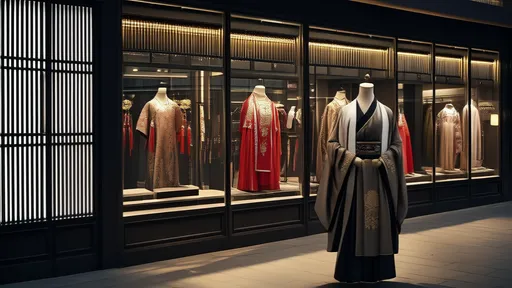
Visual merchandising presents another pain point. Many stores struggle to effectively display garments that often require specific draping or layering to showcase their design integrity. "We've had to completely rethink our mannequin selections and window displays," noted the buying director of a prominent London concept store. "The standard rigid poses simply don't do justice to the fluidity of these designs."

Emerging Design Talent and Retail Partnerships

The survey highlights an exciting development in designer-retailer collaborations. Young Chinese designers reinterpreting traditional aesthetics are finding unprecedented international exposure through these boutique partnerships. Rather than relying solely on established luxury houses, forward-thinking buyers are actively scouting emerging talent from design incubators in Shanghai, Beijing, and Shenzhen.

This direct pipeline benefits both parties—designers gain crucial international distribution without compromising their creative vision, while retailers secure exclusive pieces that differentiate their offerings. Several boutiques reported that capsule collections developed through these partnerships achieved sell-out status within weeks, suggesting strong market appetite for authentic yet innovative cultural expressions.

Future Projections and Strategic Considerations

Industry analysts predict the Han element adoption rate could reach 50% among international boutiques within three years, fueled by continued consumer interest and improving supply chain efficiencies. However, sustainable growth will require addressing several critical factors. Educational initiatives for both retail staff and consumers appear essential to properly communicate the cultural significance behind design elements.

Furthermore, the development of specialized buying teams with deep cultural knowledge may become a competitive advantage for retailers serious about this category. As one Milan-based buyer observed, "The retailers who will succeed long-term with these collections are those willing to invest in proper contextual understanding, not just chase a trend." This sentiment echoes across our survey data, suggesting that superficial cultural appropriation will likely face increasing consumer backlash.

The integration of Han elements into international retail assortments represents more than a passing trend—it signals a broader shift toward cultural exchange in global fashion. As boundaries between traditional and contemporary continue to blur, retailers who navigate this space with authenticity and respect stand to gain both commercially and creatively. The coming seasons will likely see further refinement of this movement as the industry develops best practices for cultural representation at retail.
Recommend Posts
Fashion

Advanced Architectural Pleats: Deconstructivism's Explosive Application in Wedding Dresses

By /Aug 13, 2025

The intersection of architecture and fashion has always been a fertile ground for innovation, but few movements have sparked as much controversy and excitement as deconstructivism's explosive entry into bridal wear. What began as an architectural rebellion against rigid forms has evolved into a radical reimagining of the wedding dress - tearing apart traditions with the same fervor that Frank Gehry's titanium curves shattered conventional museum designs.
Fashion

The Cost of Democratization: The Dilemma of Niche Designs Being Copied

By /Aug 13, 2025

The democratization of design tools has undeniably transformed creative industries, lowering barriers to entry and empowering independent creators worldwide. Yet this accessibility comes with an insidious side effect: the rampant copying of niche designs by mass-market producers. What begins as a celebration of creative liberation often ends in the erosion of originality, leaving small designers trapped between visibility and vulnerability.
Fashion

The Slow Fashion Paradox: A Consumer Behavior Survey Report

By /Aug 13, 2025

The fashion industry stands at a crossroads, caught between the relentless churn of fast fashion and the emerging ethos of slow fashion. While consumers increasingly voice concerns about sustainability and ethical production, their purchasing behaviors often tell a different story. This paradox, known as the slow fashion paradox, reveals a complex interplay between intention and action that continues to challenge brands and policymakers alike.
Fashion

Nostalgia Cycle: Acceleration of Decade Fashion Recurrence Phenomenon

By /Aug 13, 2025

The fashion industry has always been cyclical, with trends from the past resurfacing in new iterations. However, in recent years, this nostalgic cycle has accelerated dramatically. What once took thirty years to revisit now reappears within a decade, if not sooner. The phenomenon of rapidly recycling trends speaks volumes about our collective yearning for familiarity in an increasingly chaotic world.
Fashion

Virtual Idol Wardrobe: Cost of Digital Asset Materialization

By /Aug 13, 2025

The intersection of virtual idols and fashion has created a fascinating new frontier in both the digital and physical retail spaces. As these computer-generated personalities amass millions of followers, their meticulously designed digital wardrobes have become unexpected trendsetters in real-world fashion. This phenomenon has given rise to an emerging industry focused on translating virtual garments into tangible, wearable pieces - a process that involves complex technical, legal, and economic considerations.
Fashion

International Buyer Store Shelf Rate Survey

By /Aug 13, 2025

The global fashion landscape has witnessed a significant shift in recent years, with international boutique buyers increasingly embracing Han-inspired elements in their curated selections. This trend reflects a growing appreciation for the fusion of traditional Chinese aesthetics with contemporary design sensibilities. Our comprehensive market survey reveals fascinating insights into how these cultural motifs are being adopted by premium retailers worldwide.
Fashion

Internet Celebrity Designers: Creative Dilemmas in the Era of Traffic"

By /Aug 13, 2025

The rise of influencer designers has reshaped the creative landscape, blending artistry with the relentless demands of social media algorithms. These designers, once celebrated for their originality, now find themselves trapped in a paradox: the need to create meaningful work while catering to the fleeting attention spans of online audiences. The pressure to go viral often overshadows the pursuit of depth, leaving many questioning whether their craft is being compromised by the very platforms that made them famous.
Fashion

Luxury Pricing: Unveiling the Ratio of Cost to Premium

By /Aug 13, 2025

The world of luxury goods operates on an entirely different economic paradigm than mainstream consumer products. Behind the polished storefronts and artfully crafted advertisements lies a complex pricing strategy that blends tangible craftsmanship with intangible desire. The relationship between production costs and retail prices in this sector often defies conventional business logic, creating what economists call "the luxury paradox."
Fashion

The Irreplaceability of Physical Fashion Shows: A Value Report

By /Aug 13, 2025

The fashion industry has long thrived on spectacle, and nowhere is this more evident than during the whirlwind of Fashion Weeks held across the globe. While digital presentations and virtual runways have gained traction, particularly in the wake of recent global disruptions, the irreplaceable value of physical fashion shows remains undeniable. These events are not merely about displaying garments; they are immersive experiences that blend artistry, storytelling, and human connection in a way that pixels on a screen simply cannot replicate.
Fashion

Supermodel Aging: The Dominance of Models Over 50 on the Screen

By /Aug 13, 2025

The fashion industry, long synonymous with youth and novelty, is undergoing a quiet revolution. Runways and campaigns that were once dominated by teenagers and twenty-somethings now regularly feature models in their 50s, 60s, and beyond. This seismic shift toward "supermodel aging" reflects broader cultural changes—where experience, authenticity, and defiance of ageist norms are rewriting the rules of beauty.
Fashion

Regeneration of the Title: Copyright Dilemmas in AI-Generated Designs"

By /Aug 13, 2025

The creative world is grappling with an existential crisis as artificial intelligence reshapes the very foundations of intellectual property. Recent legal developments and academic discourse have dramatically expanded traditional definitions of plagiarism to include AI-generated content, throwing design industries into uncharted territory. This seismic shift forces us to reconsider what constitutes original work in an era where machines can produce stunning visuals with minimal human input.
Fashion

Barefaced Revolution: The Fashionable Expression of Flawed Skin"

By /Aug 13, 2025

The beauty industry has long been dominated by the pursuit of flawless skin, airbrushed to perfection in magazines and filtered beyond recognition on social media. But a quiet revolution is brewing—one that celebrates the raw, unfiltered reality of human skin. The #NoMakeup movement, often dubbed the "bare-faced rebellion," is challenging conventional beauty standards by embracing acne scars, hyperpigmentation, and texture as marks of individuality rather than imperfections to be concealed.
Fashion

Scent Fabric: Microcapsule Technology for Long-lasting Fragrance

By /Aug 13, 2025

The world of textiles is undergoing a fragrant revolution with the advent of scent-infused fabrics. At the heart of this innovation lies microencapsulation technology, a groundbreaking method that enables fabrics to retain and release fragrances over extended periods. This marriage of science and sensory pleasure is redefining how we experience textiles in our daily lives.
Fashion

Nail High-End Customization: Micro-Sculpture Fingertip Art

By /Aug 13, 2025

In the ever-evolving world of beauty and self-expression, high-end nail art has transcended mere polish and embellishments to become a canvas for intricate micro-sculptures. What was once a simple manicure has now blossomed into a breathtaking art form, where nails serve as tiny galleries for avant-garde designs. This fusion of craftsmanship and creativity has given rise to what industry insiders are calling "haute couture for nails" – a realm where meticulous detailing meets boundless imagination.
Fashion

Color Revolution in Hair Dye: Breakthroughs in Plant-Based Hair Colorants

By /Aug 13, 2025

The beauty industry is witnessing a quiet revolution as plant-based hair dyes emerge from the fringe to challenge conventional chemical formulations. This shift represents more than just another greenwashing trend—it's a fundamental reimagining of how we approach hair coloration, with researchers unlocking nature's chromatic potential in ways previously thought impossible.
Fashion

Virtual Try-On Technology Breakthroughs in Fashion Shows

By /Aug 13, 2025

The beauty industry is undergoing a digital revolution that's blurring the lines between fantasy and reality. What began as extravagant runway makeup looks designed solely for artistic expression has now found its way into everyday consumer experiences through groundbreaking virtual try-on technology. This innovation represents more than just a novel shopping feature—it's fundamentally changing how consumers interact with beauty products and how brands conceptualize product development.
Fashion

Silk Scarf Transformation: From Neckwear to Top

By /Aug 13, 2025

In the ever-evolving world of fashion, accessories often transcend their traditional roles to become versatile style statements. Among these, the humble silk scarf has undergone a remarkable transformation—from being a classic neck adornment to emerging as an innovative garment component. Designers and fashion enthusiasts alike are reimagining scarves as stylish tops, blurring the lines between accessories and apparel in ways that challenge conventional wardrobe norms.
Fashion

Glove New Chapter: The Collision of Lace and Leather

By /Aug 13, 2025

The fashion world is no stranger to unexpected pairings, but the latest trend blending delicate lace with rugged leather in gloves has sent ripples through the industry. This bold juxtaposition of textures—soft versus hard, feminine versus edgy—creates a striking visual tension that designers are calling "the ultimate style paradox."
Fashion

Belt Revolution: Programmable Illuminated Belt

By /Aug 13, 2025

The fashion tech landscape is undergoing a quiet revolution, and it's happening at waist level. Programmable light-up belts, once considered gimmicky accessories for ravers and festival-goers, have evolved into sophisticated wearable technology that's blurring the lines between functional apparel and interactive art.
Fashion

Resurgence of Hair Accessories: The Return of Pearl Tulle Hats

By /Aug 13, 2025

The fashion world is no stranger to cyclical trends, but few revivals feel as delightfully nostalgic yet refreshingly modern as the return of pearl-embellished netted hats. Once a staple of 1950s elegance and 1980s haute couture drama, these delicate headpieces are making an audacious comeback on runways, red carpets, and street style scenes alike. This resurgence isn't merely about recycling old ideas; it's a reinvention that speaks to contemporary desires for both romance and rebellion in accessories.