In the ever-evolving world of fashion, accessories often transcend their traditional roles to become versatile style statements. Among these, the humble silk scarf has undergone a remarkable transformation—from being a classic neck adornment to emerging as an innovative garment component. Designers and fashion enthusiasts alike are reimagining scarves as stylish tops, blurring the lines between accessories and apparel in ways that challenge conventional wardrobe norms.
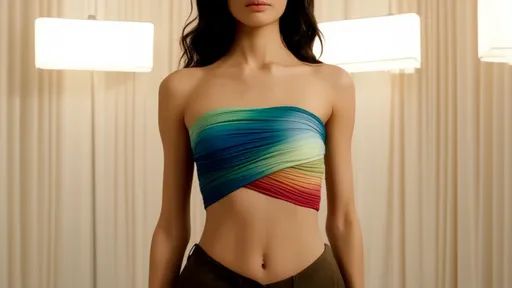
The journey of the scarf from neck to torso began as an experimental trend among avant-garde stylists. What started as playful draping techniques soon evolved into structured designs, with scarves being folded, twisted, and secured to create everything from halter necks to bandeau tops. The lightweight fabric and vibrant patterns intrinsic to silk scarves make them particularly suited for this metamorphosis, offering both comfort and visual appeal during warmer seasons.
Historical roots of this practice can be traced back to the resourcefulness of mid-20th century fashion. Iconic figures like Brigitte Bardot and Audrey Hepburn occasionally repurposed their scarves as headbands or shawls, subtly hinting at the accessory’s potential beyond its typical use. However, contemporary iterations have pushed boundaries further, incorporating intricate knots, strategic pleating, and even hardware like rings and clips to achieve secure, tailored fits.
Social media platforms have accelerated this trend’s popularity, with influencers demonstrating countless scarf-to-top conversions. A single square scarf can transform into an asymmetrical off-shoulder blouse when diagonally folded and tied at the waist, while larger rectangular scarves may wrap around the torso multiple times to form elegant crop tops. The DIY aspect resonates strongly with younger generations who prioritize sustainability and individuality in their fashion choices.
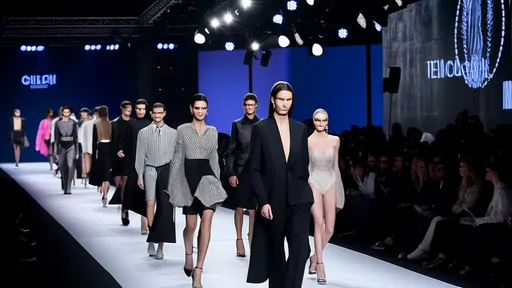
Sustainability advocates celebrate this trend as a win for conscious consumption. A high-quality silk scarf-turned-top reduces reliance on fast fashion by maximizing the utility of existing wardrobe pieces. Luxury brands have taken note—Hermès’ recent runway shows featured scarves reconfigured as bodices, while Gucci incorporated vintage floral scarves into layered bustier designs. This high-fashion endorsement has legitimized what was once considered a makeshift styling hack.
Practical considerations accompany this sartorial innovation. Stylists recommend testing scarf fabrics for opacity and stretch before wear, with thicker silks or blended materials providing better coverage. Mastering foundational tying techniques proves essential; the classic "twist-and-tie" method creates instant sleeves, whereas origami-inspired folds yield structured sweetheart necklines. Fashion tape becomes the secret weapon against wardrobe malfunctions, ensuring scarves stay securely in place throughout the day.
The cultural implications of this trend reflect broader shifts in fashion democratization. By transforming accessories into garments, wearers reclaim agency over their styling narratives, often subverting traditional gender norms in the process. Masculine-presenting individuals have adopted the look, pairing scarf tops with tailored trousers for androgynous appeal. Meanwhile, resort wear collections increasingly feature pre-stitched scarf tops—proof that this temporary trend is solidifying into mainstream fashion lexicon.
As temperatures rise, the scarf top’s breathability makes it a summer staple across hemispheres. From Mediterranean beach clubs to Tokyo’s bustling streets, the sight of knotted silk fluttering against bare skin has become synonymous with effortless chic. Yet its versatility shines year-round—layered under blazers for autumn or paired with faux fur coats in winter, the scarf top continually reinvents itself.
Looking ahead, technological advancements may further revolutionize this concept. 3D printing experiments with scarf-like materials that "morph" between accessory and garment states suggest a future where such transformations require no manual manipulation. For now, the handmade charm of personally crafting a scarf into wearable art remains integral to its appeal—a tactile reminder that in fashion, boundaries are meant to be elegantly unraveled.
By /Aug 13, 2025

By /Aug 13, 2025
By /Aug 13, 2025
By /Aug 13, 2025
By /Aug 13, 2025
By /Aug 13, 2025

By /Aug 13, 2025
By /Aug 13, 2025
By /Aug 13, 2025

By /Aug 13, 2025

By /Aug 13, 2025
By /Aug 13, 2025
By /Aug 13, 2025
By /Aug 13, 2025

By /Aug 13, 2025

By /Aug 13, 2025
By /Aug 13, 2025
By /Aug 13, 2025

By /Aug 13, 2025
By /Aug 13, 2025
